



Blog
History of Rattan Factory in Cirebon, Indonesia

History of Rattan Factory in Cirebon, Indonesia
The rattan industry in Indonesia has established itself as a craft and furniture sector with a strong reputation in the global market. As a country with tropical forests rich in various types of rattan, Indonesia contributes a significant portion of the world's rattan supply, both as raw materials and as high-value processed products. The diverse range of rattan species—from manau, sega, batu, to jawit—has enabled this industry to grow rapidly and continue to innovate to meet international market needs. Among the various rattan producing and processing regions, the rattan factory in Cirebon has emerged as the center of the national rattan industry. The city is renowned as home to thousands of artisans and dozens of rattan factories producing chairs, tables, baskets, decorations, and premium furniture for export. The knowledge of weaving, shaping, and processing rattan has been deeply rooted in Cirebon's culture for decades.
Cirebon has become an iconic rattan manufacturing center not only because of its large industrial base, but also because of its long history, which dates back to the 1950s. Hereditary craftsmanship, proximity to trade routes, and its ability to adapt to global trends have earned Cirebon the reputation of "rattan city." To this day, Cirebon remains Indonesia's largest and most influential rattan production center, playing a vital role in maintaining Indonesia's position in the global furniture industry.
The Beginning of the Rattan Industry in Cirebon
The development of the rattan industry in Cirebon did not occur suddenly. Its historical roots begin with the introduction of rattan as a vital commodity in the coastal areas of West Java in the mid-20th century. At that time, rattan was largely harvested from the forests of Kalimantan, Sulawesi, and Sumatra, then imported to Cirebon via maritime trade routes.
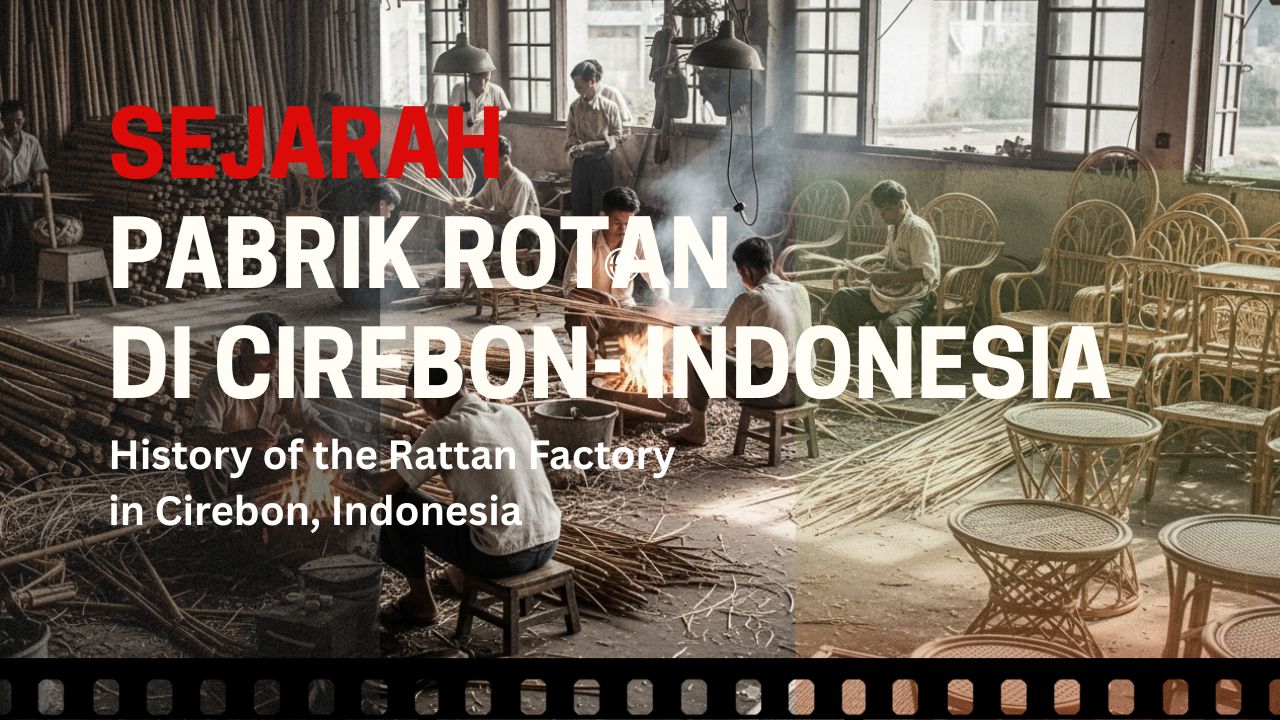
The availability of rattan as a raw material encouraged the emergence of local craftsmen who began processing it into various simple products such as chairs, baskets, household containers, and even decorations. Between the 1950s and 1970s, the hand-woven skills of the Cirebon people became increasingly recognized, and many families started home businesses that later grew into small rattan workshops. This journey laid the foundation for the birth of the Cirebon rattan industry. Starting from local creativity and economic needs, this home industry gradually developed into a production center that would later become known nationally and internationally.
The history of rattan entering and developing in the Cirebon region.
Rattan has been widely known in Cirebon since the early days of inter-island trade. Cirebon's strategic location on the coastal route made it easy for raw materials from Kalimantan and Sulawesi to reach the port. In the 1950s, rattan began to be regularly supplied to the region, sparking the growth of simple processing activities. Local people saw economic opportunities in this flexible and malleable material.
The role of local craftsmen in the early period (1950–1970).
Local artisans were the driving force. They began with basic techniques such as smoothing, splitting, and assembling rattan into simple household products. Hereditary skills and the creativity of the local people quickly made Cirebon rattan products popular. Between 1950 and 1970, the artisans worked independently with very limited equipment, yet their products remained in high demand.
The start of a home industry and small rattan workshop.
As demand increased, many home-based businesses emerged. Small rattan workshops sprang up in artisan villages such as Tegalwangi and Trangkil. Production was still manual, utilizing the labor of family and neighbors. While seemingly simple, this model laid the foundation for the establishment of large rattan factories later. These home industries gradually formed production networks capable of meeting both national and international markets.
Growth of Rattan Factories and Exports (1970–1990)
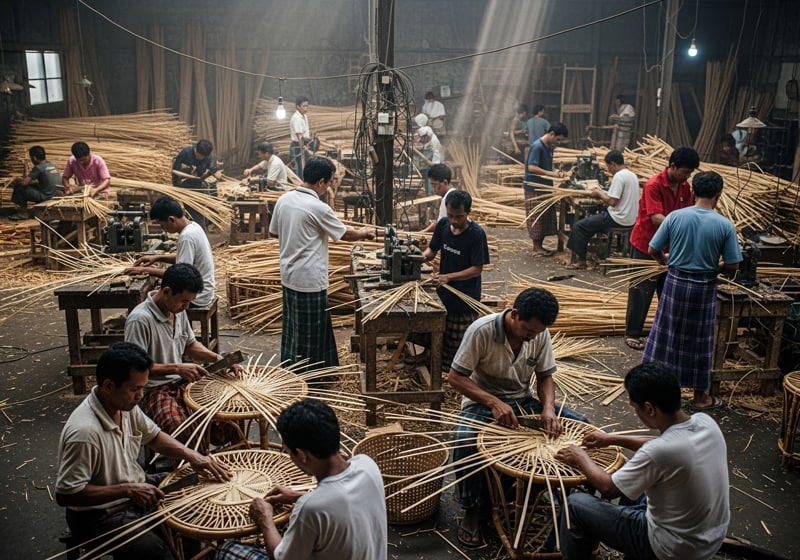
Between 1970 and 1990, the rattan industry in Cirebon entered its golden age. Global demand for rattan furniture increased rapidly, particularly from European and American markets, spurring the establishment of many medium- to large-scale rattan factories in the region. Local entrepreneurs who previously operated home-based workshops began expanding their operations, forming more organized production networks.
In this era, processing and finishing processes began to undergo modernization, though still relatively simple. The use of drying ovens, sanding machines, and new dyeing techniques helped improve product quality, enabling it to compete in the global market. Government support through industrial policies and export incentives also strengthened Cirebon's position as a national rattan production center.
The rapid industrial growth during this period not only increased production capacity but also created significant employment opportunities for the local community. This solid foundation has made Cirebon known as Indonesia's largest rattan center to this day.
The Golden Age of Cirebon's Rattan Industry
Entering its golden decade, Cirebon's rattan industry reached its peak as one of the largest and most prominent rattan production centers in Indonesia—and even in Asia. During this period, Cirebon's name became increasingly recognized internationally thanks to the consistent quality of its rattan products, rapidly evolving designs, and the unrivaled skills of its local craftsmen. This success not only increased global competitiveness but also brought significant economic benefits to the Cirebon community. Diverse craft centers flourished, employment opportunities expanded, and rattan factories developed into the backbone of the regional economy. This period laid a strong foundation for Cirebon's legendary reputation as the "City of Rattan" to this day.
Growth of Rattan Factories and Exports (1970–1990)
The period from 1970 to 1990 was one of the most decisive phases in the development of the rattan industry in Cirebon. During this period, international market demand for rattan furniture increased rapidly, opening up significant opportunities for local craftsmen and industry players to advance. Not only did home businesses flourish, but large-scale rattan factories began to emerge, capable of mass production for export.
Supported by global demand and government policies that began to organize the national rattan industry, Cirebon transformed into a production center with increasingly organized, if still rudimentary, technology. This era laid a crucial foundation that solidified Cirebon's position as Indonesia's largest rattan center, a influence still felt today.
Transformation of Cirebon Rattan Factory
Entering the 2000s, the rattan industry in Cirebon began undergoing a major transformation. Changing global market tastes, the advent of new technologies, and increased competition forced many rattan factories to adapt to stay relevant. From relying on manual processes and traditional designs, factories began shifting to more modern, efficient production, oriented toward global interior trends. This transformation was evident not only in the technical aspects of production but also in how factories developed design identities, forged creative collaborations, and expanded access to international markets.
The Role of Rattan Center Villages in Craft Preservation
Cirebon's rattan-producing villages play a crucial role in preserving the heritage of rattan crafts. Among them, Tegalwangi is known as a key icon—a village where almost all residents depend on rattan crafts for their livelihood. It is here that the skills of weaving, bending, and assembling rattan are passed down from generation to generation, from senior craftsmen to younger generations. This tradition not only preserves cultural values but also ensures the product quality is maintained over time.
Furthermore, artisan communities, cooperatives, and joint ventures play a significant role in maintaining the local rattan industry ecosystem. They serve as platforms for sharing knowledge, setting production standards, and supporting marketing to various regions and internationally. Through community solidarity and the dedication of artisans, the rattan-producing villages have successfully maintained Cirebon's identity as the center of Indonesian rattan crafts to this day.
Current Condition of Cirebon Rattan Industry
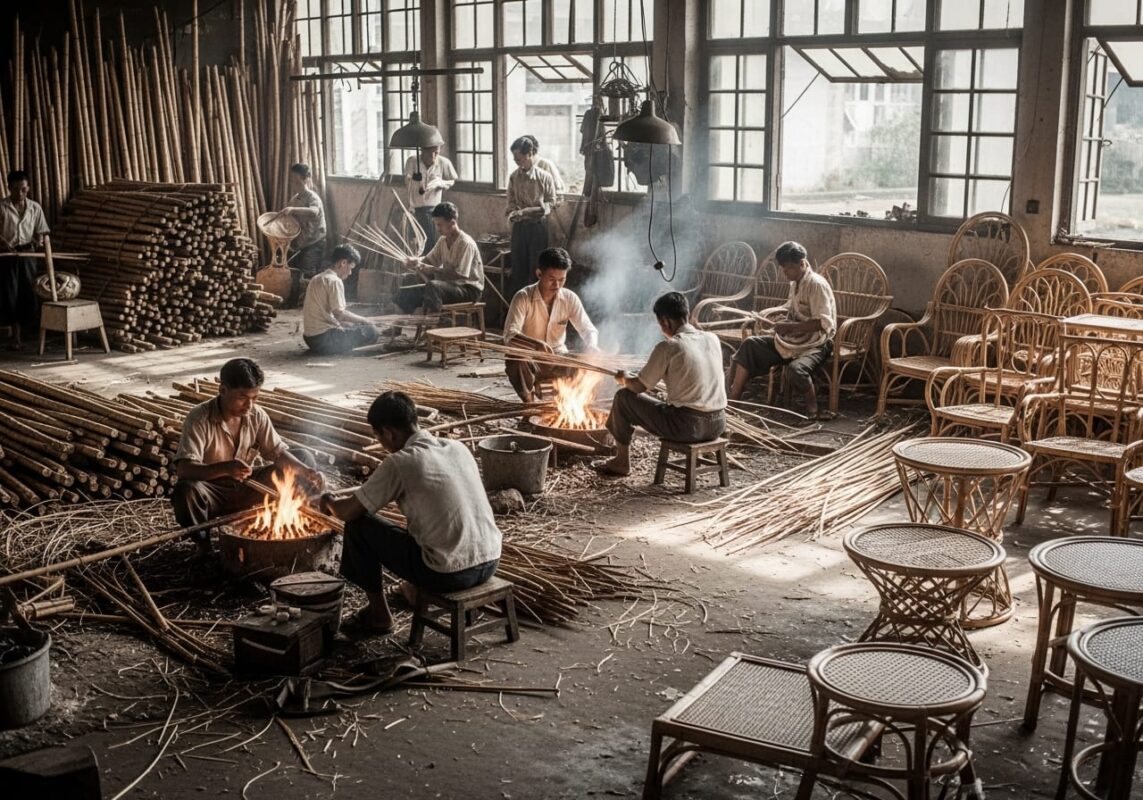
Cirebon's rattan industry has again shown positive dynamics in recent years. Supported by the growing global trend toward natural, sustainable, and eco-friendly materials, demand for Indonesian rattan products—particularly from Cirebon—has seen a significant increase. Markets in Europe, America, and Asia are now more open to rattan furniture and crafts that prioritize natural aesthetics and sustainability.
Locally, Cirebon continues to strengthen its position as Indonesia's largest rattan industry hub. The emergence of modern factories and the growth of rattan micro, small, and medium enterprises (MSMEs) have made the production ecosystem increasingly diverse and adaptable. The use of various types of rattan, such as manau, sega, fitrit, and even rattan-wood combinations, enriches design variations and expands market segments. Furthermore, design innovations and improved finishing quality make Cirebon rattan products increasingly competitive in the international market. Supported by a skilled workforce, a long tradition of rattan craftsmanship, and a growing export focus, Cirebon has significant potential to develop as a globally competitive center for rattan-based creative industries. This industry not only has high economic value but also contributes to the development of sustainable products that are in high demand globally.
1. The Rise of Natural & Eco-Friendly Material Trends
In recent years, the global trend has returned to the use of environmentally friendly materials. Global consumers—from Europe and America to Japan—prefer products made from natural, renewable, and sustainable materials. Rattan, as a non-timber forest commodity, fulfills all of these criteria. Cirebon, as one of Indonesia's largest rattan industrial centers, has benefited significantly from this trend. Many international interior brands have begun to seek rattan products to replace synthetic materials and plastic.
2. Export Demand Rises Again
After initially declining due to the pandemic and pressure on the global supply chain, demand for rattan exports increased again in 2022–2025.
Some of the driving factors:
- Stable demand for natural furniture for residential, hotel, resort and commercial projects.
- Increasing consumer awareness regarding sustainability.
- The government is strengthening the logistics system and facilitating the export of MSME products.
The main destination countries remain: AS, Belanda, Belgia, Jerman, Inggris, Jepang, Korea Selatan, dan Australia.
3. Many modern factories and MSMEs use various types of rattan.
Cirebon's rattan industry is currently moving towards a more modern and standardized direction, both in:
- drying process,
- heating (steam treatment),
- coloring & finishing water-based,
- export quality control.
The main raw materials used by Cirebon rattan factories and MSMEs include:
- Manau Rattan → kuat, diameter besar, ideal untuk rangka furnitur premium.
- Sega Rattan → fleksibel, cocok untuk rangka menengah dan detail lengkung.
- Peel/Pitrit Rattan → untuk anyaman, dekorasi, wrapping.
- Rattan-Wood Combination → tren populer untuk produk modern minimalis.
This diversity of materials makes Cirebon capable of producing various types of furniture: chairs, benches, baskets, decorations, outdoor living sets, and even hotel project furniture.
4. Cirebon's Potential as a Center for Rattan-Based Creative Industries
Cirebon is further strengthening its position as Indonesia's leading creative and rattan manufacturing hub. Some of its current emerging potentials include:
- A gathering of craftsmen, factories, designers and exporters in one area.
- Collaboration with design and education institutions to produce new rattan designers.
- There is support from local governments and industry associations.
- Many large factories are opening research and development (R&D) units to keep up with global trends.
This makes Cirebon not only a production center, but also a center for rattan design innovation, both for local and international markets.
Cirebon Rattan Factory's Contribution to Indonesia
Cirebon's rattan industry has played a strategic role in the development of Indonesia's creative economy and manufacturing sector. As one of the largest rattan production centers in Asia, Cirebon's rattan factories not only employ a large local workforce but also drive the export of natural-material furniture and crafts. With the ability to process various types of rattan—from manau rattan and sega rattan to synthetic rattan—this industry is able to produce high-quality products that compete in the global market.
Beyond its economic contribution, the Cirebon rattan factory also strengthens Indonesia's image as the world's largest rattan producer. Through design innovation, production efficiency, and the use of environmentally friendly materials, this industry plays a crucial role in promoting sustainability, opening opportunities for MSMEs, and enhancing national competitiveness. Thus, the Cirebon rattan factory serves as a crucial asset connecting local potential with global market needs, while ensuring that Indonesian crafts retain a respected place on the international stage.
Beyond focusing solely on production, Cirebon's rattan industry is also a driving force for design innovation, local employment, and the development of a creative industry based on natural materials. With a commitment to sustainability, Cirebon's rattan factories also support green industry and strengthen Indonesia's image as a country capable of processing natural resources responsibly and with high added value.
Conclusion
Cirebon's rattan industry demonstrates how cultural strength, local craftsmanship, and adaptability can maintain the sustainability of an economic sector for decades. With a long history of rattan production, Cirebon has successfully maintained its position as a national industrial hub thanks to design innovation, improved production quality, and the ability to meet global market demand. Today, rattan not only represents the cultural identity of the Cirebon people but also serves as a vital economic pillar through job creation, export contributions, and the development of creative industries based on natural materials.
 English
  Indonesian